

Written by Dr. Liu Xiqian
Faculty member, School of Life Sciences & Food Engineering, Anqing Normal University; doctoral graduate of Shanghai Jiao Tong University. Research focus: animal virus molecular immunology, microbiology and pathogen–host interactions. Updated August 18, 2026.
Quick answer: an avermectin spot-on or pour-on can be a practical external-parasite option when the exact product is labeled for the pet's species, age and weight; the dose reaches skin rather than remaining on fur; and the household can prevent licking or cross-grooming while the site dries. “Avermectin” is a drug-family term, so the exact formulation and current label matter more than the family name alone.
This is a buying-and-use guide—not a livestock dilution recipe. It answers the questions that usually appear immediately before purchase: Which product format fits? What weight information is needed? Where should drops go? Why can fleas remain visible? What does MDR1 mean? And what evidence should a trustworthy product page show?
What is an avermectin spot-on?
Avermectins are antiparasitic compounds within the broader macrocyclic-lactone group. Different compounds and formulations have different approved species, concentrations, routes and parasite claims. “Spot-on” describes a topical format in which a measured amount is placed at a label-directed skin site. “Pour-on” is also used for topical products, but livestock and companion-animal pour-ons are not interchangeable.
A product page should name its active formulation and the parasites it is intended to control. It should not ask buyers to assume that every member of the avermectin family treats every flea, tick, mite or internal worm.
Avermectin vs. ivermectin: related, not identical instructions
Ivermectin is a specific member derived from the avermectin family. The words are related chemically, but they cannot be substituted on a label or dosing chart. Internet arguments often mix three very different exposures: a low-dose pet preventive, a higher-dose veterinary treatment and accidental ingestion of concentrated livestock material. A product can be safe at its tested and labeled exposure without making every other formulation safe.
| Term | What it tells you | What you must still verify |
|---|---|---|
| Avermectin | Drug-family relationship | Exact molecule, concentration, species and dose |
| Ivermectin | Specific active compound | Whether this product/route is appropriate for the pet |
| Spot-on / pour-on | Topical application format | Pet label, application site and drying instructions |
| Flea and tick care | Commercial category | Exact parasites named on the current label |
Seven checks before you choose an avermectin product
- Species: the package must explicitly include dog, cat or both.
- Age and health restrictions: check minimum age and warnings for pregnancy, nursing, illness or low body condition.
- Accurate current weight: do not estimate from breed or last year's veterinary record.
- Active ingredient and concentration: compare these with all other parasite medicines the pet receives.
- Target parasites: confirm fleas, ticks, mites or lice individually rather than assuming broad coverage.
- Pack integrity: verify seal, lot, expiry, seller and storage history.
- Application and repeat interval: use the current package, not a screenshot from an older listing.
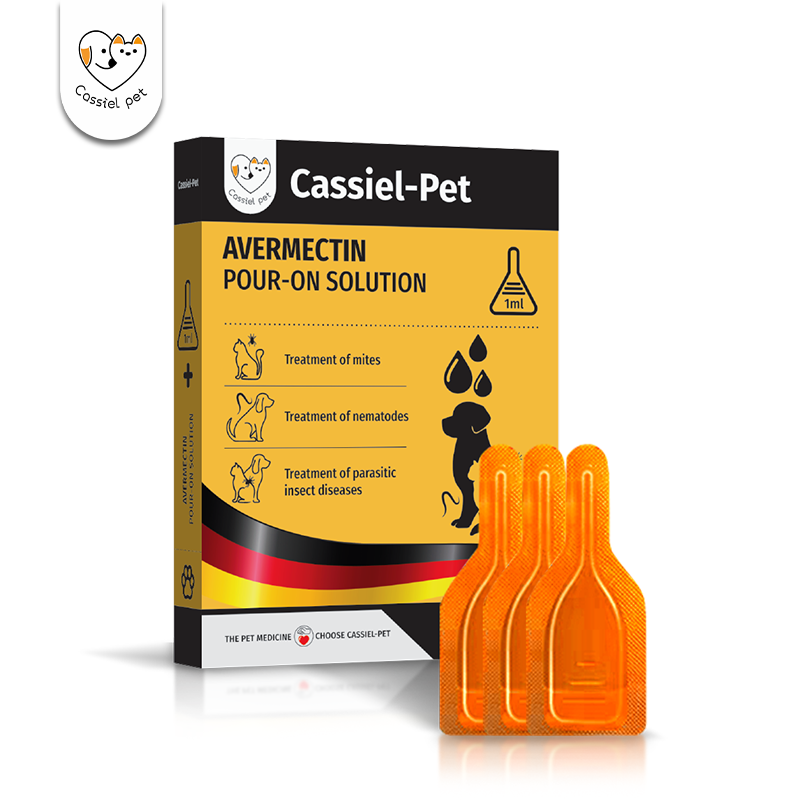
How Cassiel Pet addresses the seven checks
- Current listing identifies a topical avermectin-based spot-on.
- Dog-and-cat suitability and weight bands are displayed.
- The current listing names fleas, ticks, mites and lice as targets.
- The standard option is shown as one box containing three tubes.
- Live product page displays current price, variants and purchase options.
Your responsibility: confirm that the physical package you receive matches the live information and the individual pet.
Cassiel Pet weight-based directions currently shown online
The Cassiel Pet product page displayed the following directions on August 18, 2026. Because labels and market requirements can change, the physical package supplied with the product takes priority. Do not use this table for another brand, another concentration or a livestock product.
| Pet weight | Current Cassiel Pet online direction | Purchase check |
|---|---|---|
| 1–5 kg | 0.5 ml | Confirm species, minimum age and physical label |
| 5–10 kg | 1 ml | Confirm current weight rather than estimating |
| 10–40 kg | 1.5–3 ml along the upper spine | Use the exact label instruction for the pet's position in this range |
The live listing also states monthly application and avoiding bathing for 24 hours after use. Do not extrapolate beyond the listed range, split a tube between animals or repeat early because fleas remain visible. When the physical label is unclear or conflicts with the website, pause and contact Cassiel Pet support or a veterinarian before application.
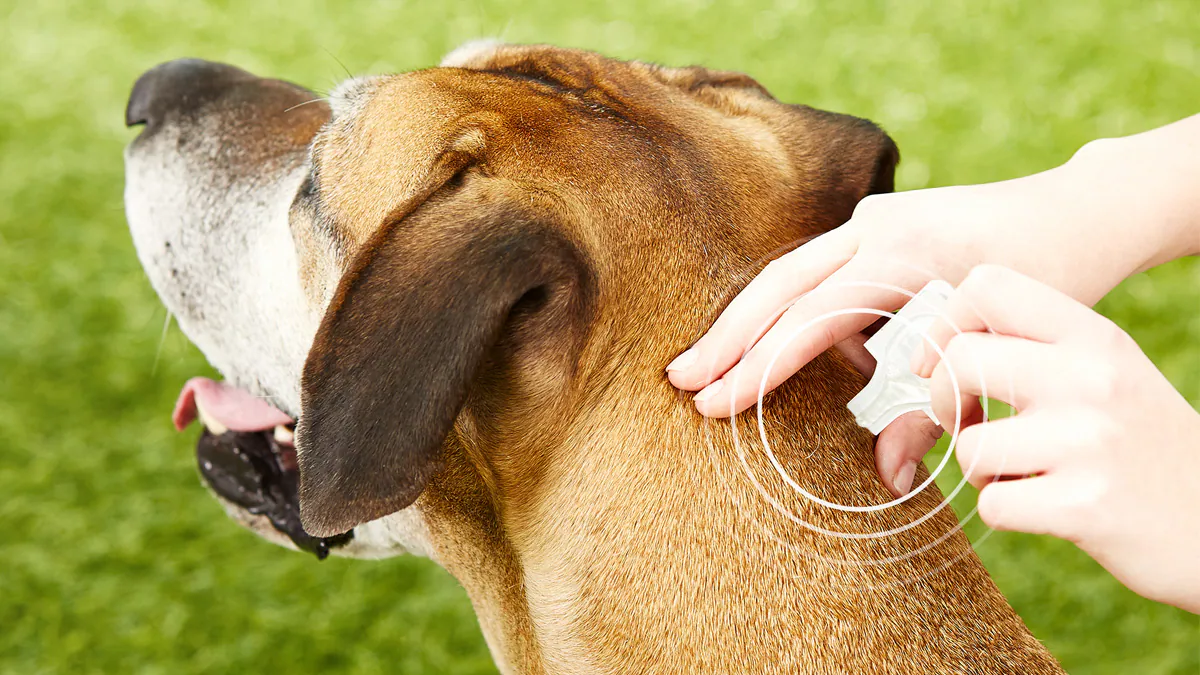
How to apply a spot-on correctly
- Start with a dry pet and intact skin. Do not apply to inflamed, wounded or wet areas.
- Open only when ready. Keep the tube upright and avoid contact with eyes or mouth.
- Part the coat completely. The liquid needs to reach the label-directed skin site rather than the outer fur.
- Apply the directed amount. Follow the physical label for one site versus multiple points along the upper back.
- Prevent licking and cross-grooming. Separate animals until the site is dry for the label-directed period.
- Record the date, lot and next scheduled application. Follow the bathing and repeat interval exactly.
Six common mistakes behind poor results
1. Applying liquid to fur
Dense hair intercepts the product. Separate the coat until skin is visible.
2. Estimating weight
A growing puppy, recently adopted pet or overweight animal may not fit the assumed range. Obtain a current weight.
3. Treating only the visibly itchy pet
Another dog or cat may maintain the flea cycle without showing the same allergic response.
4. Ignoring the home environment
Eggs, larvae and pupae develop away from the animal. Wash suitable bedding, vacuum resting zones and maintain protection for every eligible pet.
5. Bathing or swimming at the wrong time
Follow the product-specific interval. Do not assume that every topical formulation behaves the same way.
6. Stacking treatments when fleas remain
Visible fleas may be newly emerging from the home. Adding another dose or chemical without checking active ingredients can increase risk without fixing the lifecycle.
Why fleas may still appear after application
Adult fleas are only the stage visible on the animal. Eggs fall into carpets and bedding; larvae develop in protected spaces; pupae can later release new adults. A treatment may be working on fleas that reach the pet while the home continues producing new ones. Track flea-comb counts over time, treat every eligible animal and address high-use environmental zones. An established infestation can require sustained control rather than one application.
If you are not yet committed to a spot-on format, compare drops, sprays and combination approaches in the Cassiel Pet Flea & Tick Care collection →
MDR1/ABCB1: the safety issue buyers should not ignore
The ABCB1 gene—historically called MDR1—helps restrict entry of certain drugs into the brain. Some dogs, particularly within several herding-breed families and mixes, carry variants associated with increased drug sensitivity. Cats can also carry relevant variants. Risk depends on the individual genotype, exact compound and exposure.
This does not support either extreme claim that “all Collies can never receive any avermectin-family drug” or “a low-dose preventive was safe, so every dose is safe.” Ask a veterinarian about MDR1 testing or product selection for Collies, Australian Shepherds, Shelties and related dogs, especially when history or dose is uncertain.
Never convert a livestock pour-on into a pet dose
Livestock applicators can contain high concentrations and large absolute quantities designed for much heavier animals. Online conversion formulas ignore measurement error, excipients, route, species labeling and individual sensitivity. A kitchen dropper and a decimal calculation do not turn a cattle product into a companion-animal product.
What registration language does—and does not—prove
Manufacturing, establishment or facility registrations may support traceability and oversight, but they are not automatically approval of the finished product's safety and effectiveness in every market. In the United States, FDA approval of an animal drug is a separate status associated with approval records and required labeling. EPA establishment registration likewise identifies a producing establishment; it should not be described as a blanket efficacy endorsement.
A credible purchase decision uses the exact physical label, traceable manufacturer and seller, current market authorization, product-specific approval information where applicable, and realistic claims. Avoid listings that use a certificate image to replace ingredient, dose or warning information.
When to stop and seek help
After accidental ingestion, wrong-product exposure or overdose, possible warning signs include excessive drooling, vomiting, weakness, wobbliness, tremors, abnormal pupil responses, profound lethargy, disorientation, apparent blindness or seizures. Contact a veterinarian or animal poison service immediately and keep the package available. Do not induce vomiting or apply another chemical unless directed.
Frequently asked questions
Is avermectin the same as ivermectin?
No. Ivermectin is a specific compound related to the avermectin family. The family term cannot replace the product's active ingredient and directions.
How often is Cassiel Pet Avermectin applied?
The live product page currently states once monthly. Confirm the physical package and do not reapply early without professional guidance.
Can I divide one tube between two pets?
Do not improvise. Accurate weight-based exposure, product integrity and contamination control matter for each animal.
Can cats use the same product as dogs?
Only when the exact product explicitly includes both species. A dog-only flea product must never be assumed safe for cats.
Why do I still see fleas?
New adults may be emerging from the home, another pet may be untreated, or application may have missed the skin. Audit the full system before changing or stacking products.
Can I use a cattle or horse pour-on?
No. Livestock concentration and directions are not pet dosing instructions.
Should a herding-breed dog use avermectin?
Discuss the exact product, dose and MDR1 status with a veterinarian. Breed alone cannot determine an individual dog's genotype.
View price, pack options and ordering details →
Sources
- Companion Animal Parasite Council: Fleas
- Toxicology of Avermectins and Milbemycins and the Role of P-Glycoprotein
- Washington State University: MDR1 drug sensitivity
- U.S. FDA: How to tell if a drug is legally marketed for animals
Educational content. Always follow the current physical product label and seek veterinary help for adverse reactions or individual medical concerns.
0 comments